mood selection
growth
notification
mood selection
growth
notification
Spark! Emotion Garden
Spark! Emotion Garden
case study
case study
A research based emotional check in & habit tracker for neurodivergent kids. ⭐️
role
role
Lead Concept & UI Designer,
iOS Prototype Developer
Lead Concept & UI Designer, iOS Prototype Developer
timeline
timeline
4-week sprint,
summer–fall 2025
4-week sprint, summer–fall 2025
tools
tools
Figma, Jitter, Framer, Xcode
overview
The Spark! Emotion Garden is an Ios Wearable ecosystem created for the playful, authentic, and engaging encouragement of emotional regulation and reflection, behavioral development, as well as independent growth. Based on research by Franceli Cibrian Ph.D. for the Joan Ganz Sesame Workshop fellowship, Spark! is a continued design exploration of what it means to design wearables for neurodivergent early-childhood development.
Spark! is a Habit and Emotion Tracking ecosystem spanning phone and Watch, built to support autonomy, dignity, and fun for younger users.
👧🏽 = 😥
👩🏽 = 🤔
👎😵💫❌
👧🏽 = 😥
👩🏽 = 🤔
👎😵💫❌
👧🏽 = 😥 -> 👧🏽 ⭐️⌚️
⌚️ 💌📱
👩🏽📱-> 👩🏽🫡 -> 👩🏽💞👧🏽
👍🏽😁⭐️
👧🏽 = 😥 -> 👧🏽 ⭐️⌚️
⌚️ 💌📱
👩🏽📱-> 👩🏽🫡 -> 👩🏽💞👧🏽
👍🏽😁⭐️
the problem
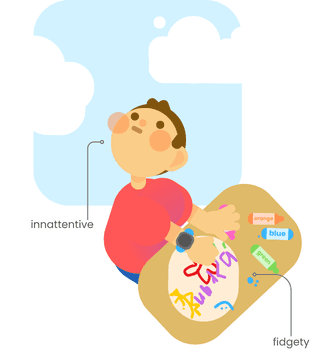
Children with ADHD often struggle to stay motivated with traditional behavior tracking methods. Traditional habit-building tools often fail neurodiverse children because they require levels of sustained attention and intrinsic motivation that is more challenging for these children.
At the same time…
caregivers are often caught between the need for oversight and a way to encourage and monitor progress without being intrusive, or becoming a source of “nagging” or friction.
research
context
context
This project builds on Dr. Cibrian's CoolCraig research, which found that children engaged more with goal-setting features than mood-tracking ones. Spark! borrows that goal-setting appeal with a garden that grows as a reward, to make emotional check-ins more engaging for kids.
This project builds on Dr. Cibrian's CoolCraig research, which found that children engaged more with goal-setting features than mood-tracking ones. Spark! borrows that goal-setting appeal with a garden that grows as a reward, to make emotional check-ins more engaging for kids.
HOW MIGHT WE . . .
HOW MIGHT WE . . .
Create a Collaborative digital ecosystem for neurodiverse learners and their caregivers that fosters emotional regulation and behavioral growth in an engaging, supportive, and unobtrusive way?
revisiting, reimagining, and rediscovering
revisiting, reimagining, and rediscovering
We reimagined everyday emotional tracking and task completion as playful, rewarding experiences. By logging emotions and completing real-world tasks, children earn in-game rewards that provide tangible validation and motivation.
We reimagined everyday emotional tracking and task completion as playful, rewarding experiences. By logging emotions and completing real-world tasks, children earn in-game rewards that provide tangible validation and motivation.
At the same time- we revisited different ways to deliver meaningful data, metrics, and insights- discovering ways to assist caregivers in monitoring progress and painpoints for their children.
At the same time- we revisited different ways to deliver meaningful data, metrics, and insights- discovering ways to assist caregivers in monitoring progress and painpoints for their children.
my role
Spark! was a multi-phase research project, with researchers, psychologists, and developers joining at different stages. I was brought on for the foundational phase as lead Concept & UI Designer, with a focus on the child’s experience.
I created the concept framework for the iOS + Apple Watch ecosystem and led the translation of our prior research findings into simple, engaging, and responsive design solutions.
I was responsible for the initial user journey design, identifying interaction touchpoints and design cues, and designing for delight across the experience. I later built the UI in SwiftUI for our iOS prototype, which I handed off to the team for their first round of user testing
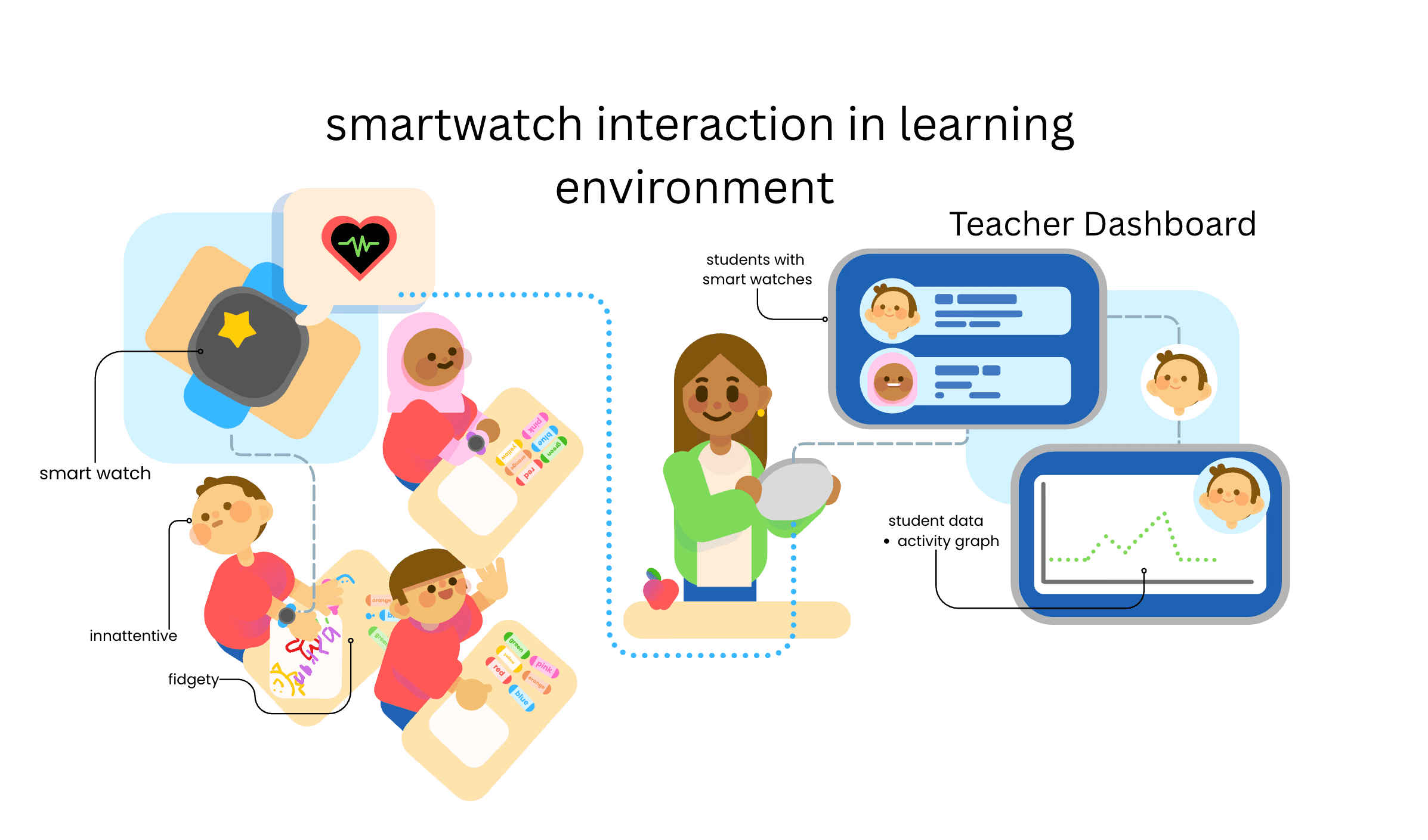
concept framework: how the child’s Watch, iOS app, and caregiver view connect
designing for delight
Designing for delight meant every decision — from typeface to tap feedback — had to earn its place. The goal wasn't just a usable product; it was one that children would want to return to, and caregivers could trust.
For Spark!, delight showed up in three ways: through motion that felt alive, visuals that felt warm, and interactions that felt rewarding. The sections below break down how each of those came to life.
designing motion
motion for play; motion for fun
When it came to designing for Spark! and our target user- children- I reflected a lot on the sentiments I associated, and admired in childhood.
In other words- what was I loving as a kid ?! What were mini-daisy and all her mini friends up to ?!
I wanted to design interactions that resonated "play", and for that- I went into my roots and thought most about what it looked like to portray playfulness, joy, and fun.
expressions of enthusiasm, and encouraging engagement - Word World, Super Mario and the power of bounce.
expressions of enthusiasm, and encouraging engagement - Word World, Super Mario and the power of bounce.
Word World © PBS KIDS is bouncy, joyful, educational and engaging and it's entirely intentional. When designing motion as a tool for engagement, I drew from the media that shaped my own childhood.
Word World © PBS KIDS is bouncy, joyful, educational and engaging and it's entirely intentional. When designing motion as a tool for engagement, I drew from the media that shaped my own childhood.
Some of the first things to come to mind were children's television, and Video Games. Word World's characters literally spring with enthusiasm, leaping out from the squish-squashing of letters. Video game transitions and micro animations like Super Mario cutscene transitions, and sprite animations all use exaggerated bounce to signal reward and momentum without taking themselves too seriously.
Some of the first things to come to mind were children's television, and Video Games. Word World's characters literally spring with enthusiasm, leaping out from the squish-squashing of letters. Video game transitions and micro animations like Super Mario cutscene transitions, and sprite animations all use exaggerated bounce to signal reward and momentum without taking themselves too seriously.

boing!
gif credit: Super Mario Advance 2: Super Mario World © Nintendo (2001). GIF via nintendo-gifs on Tumblr.
boing!
gif credit: Super Mario Advance 2: Super Mario World © Nintendo (2001). GIF via nintendo-gifs on Tumblr.
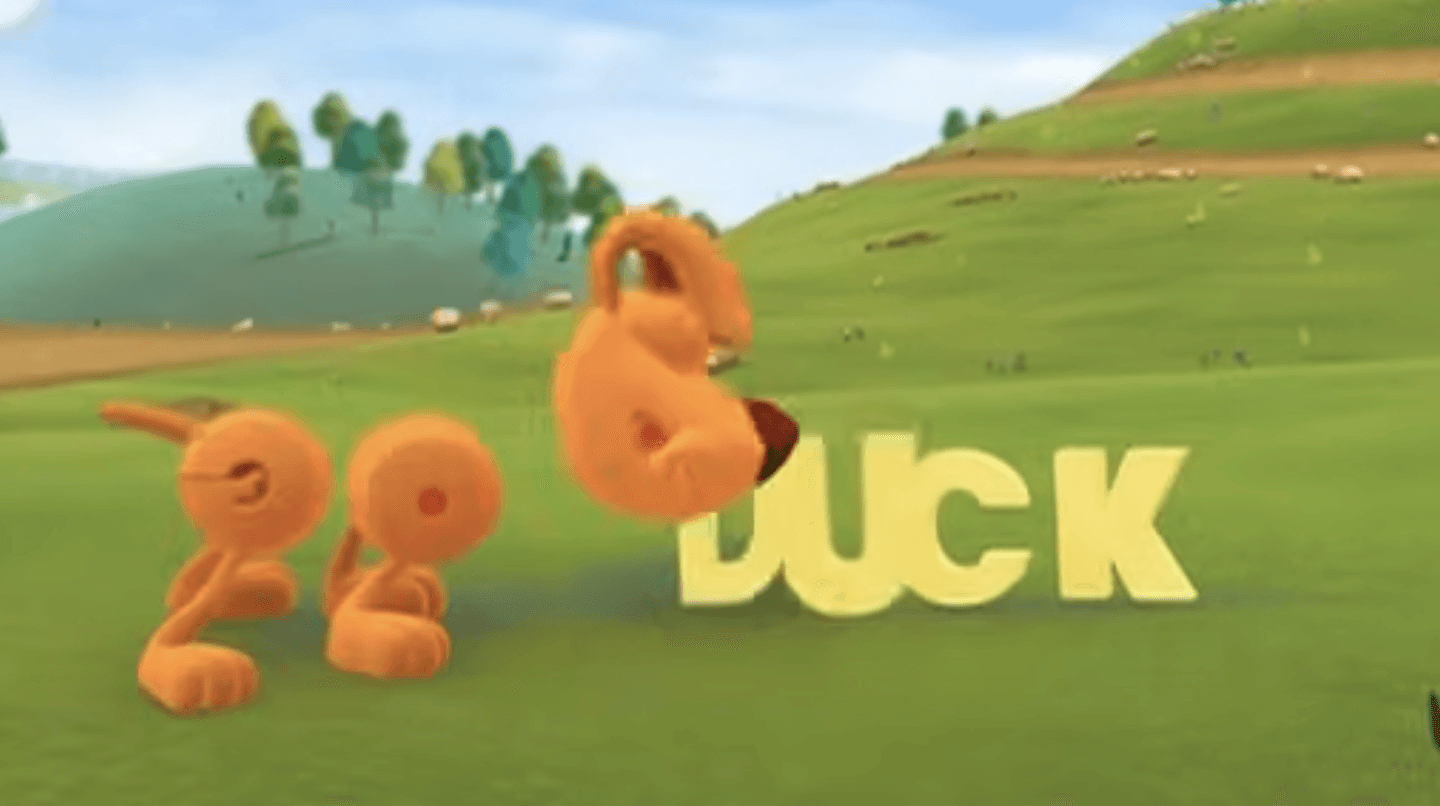
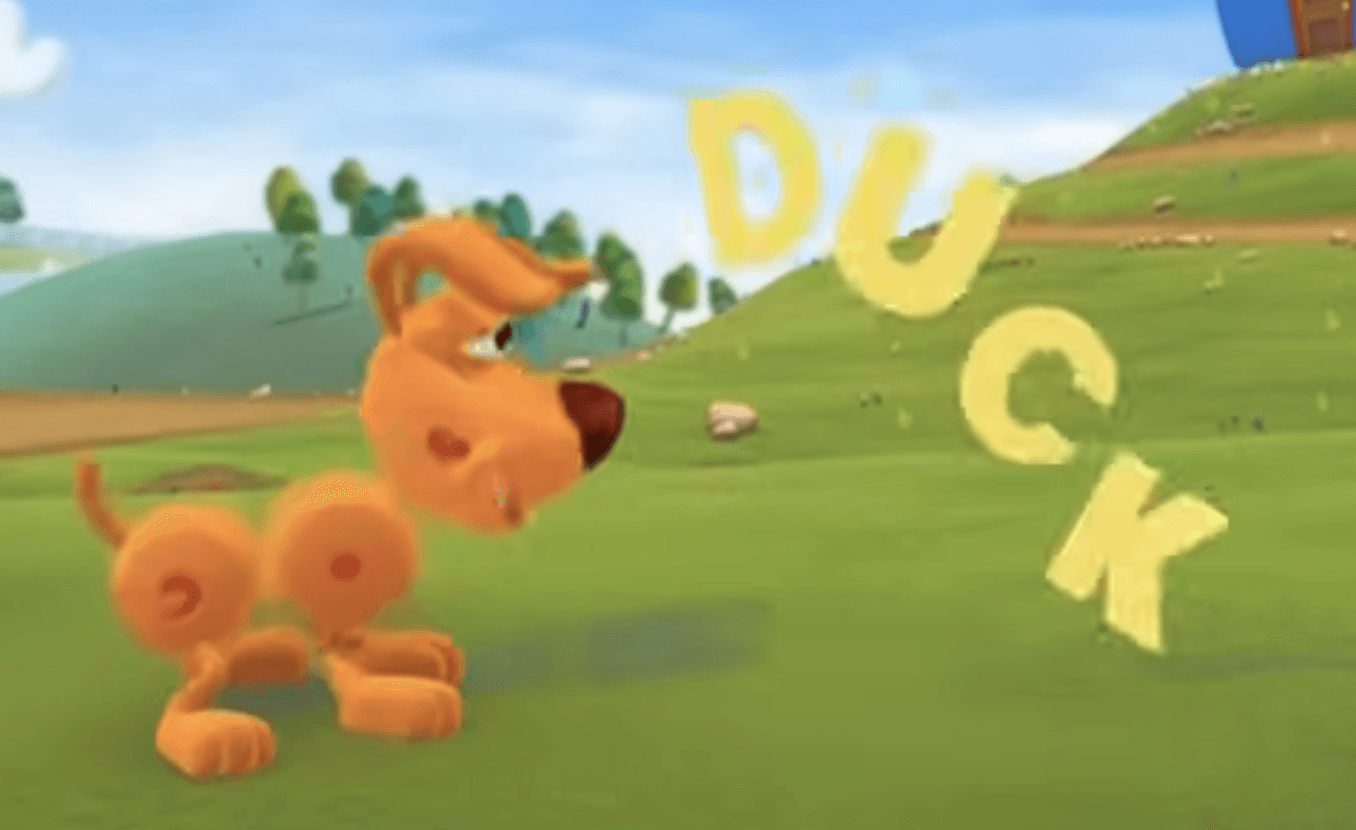
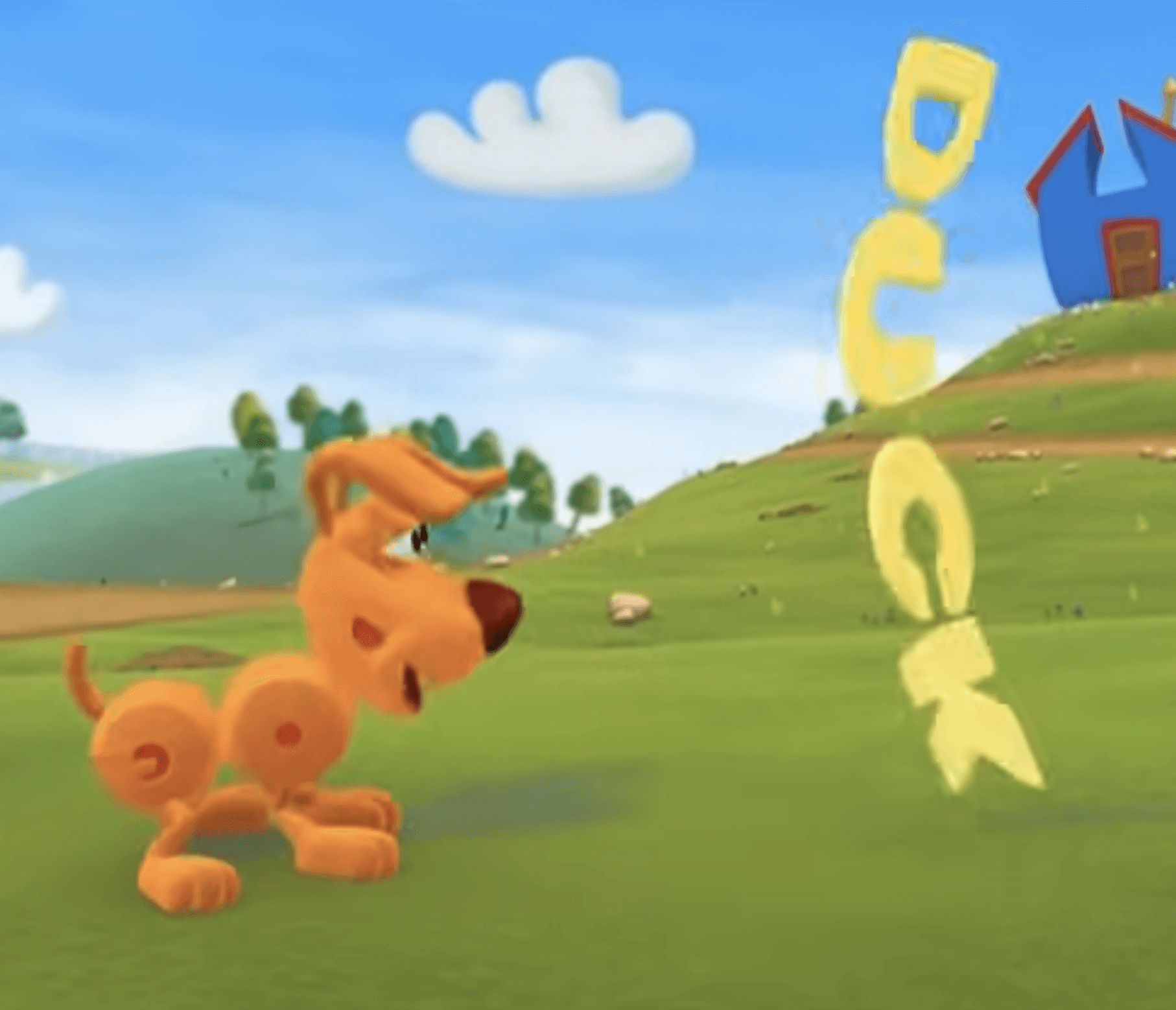
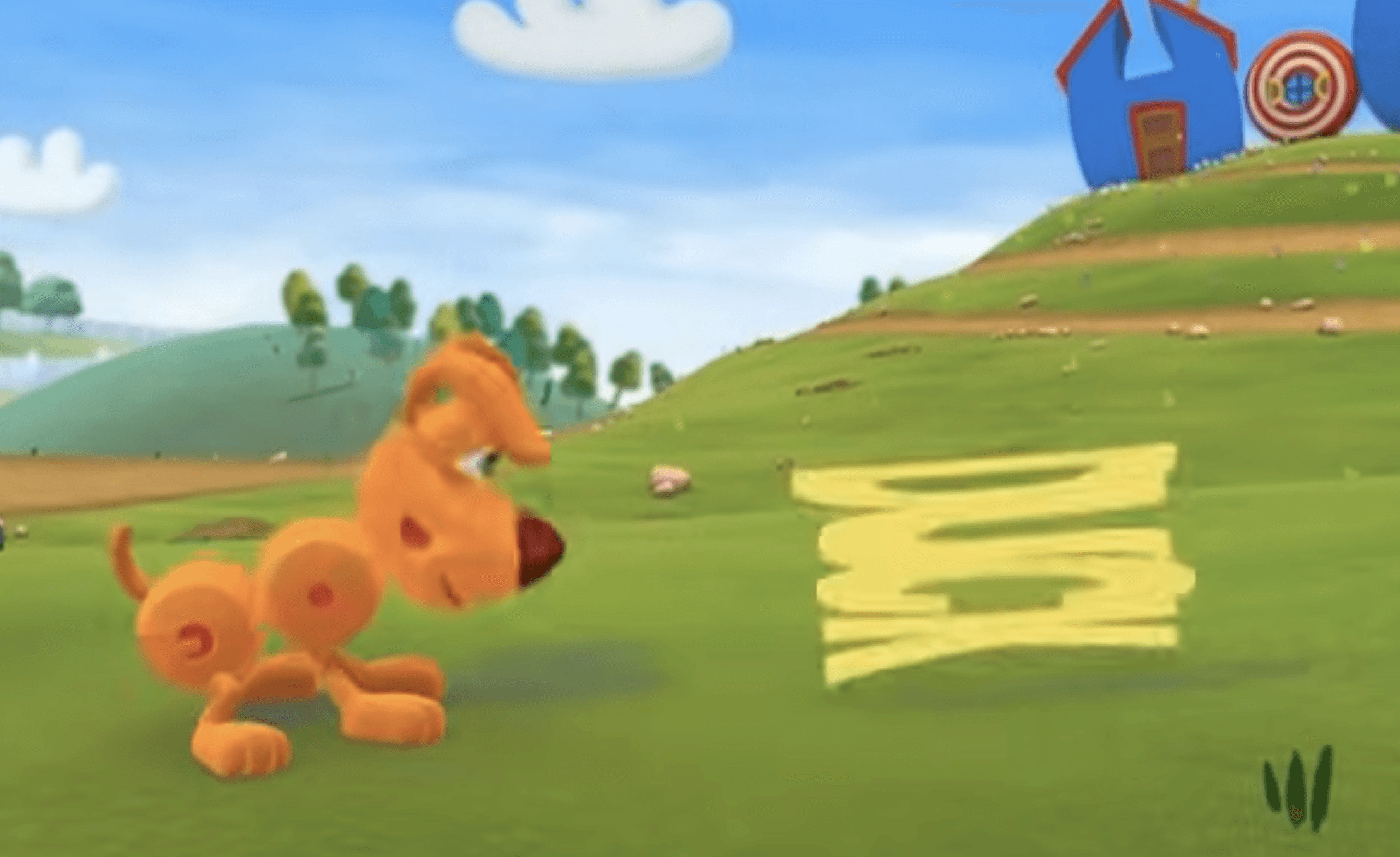
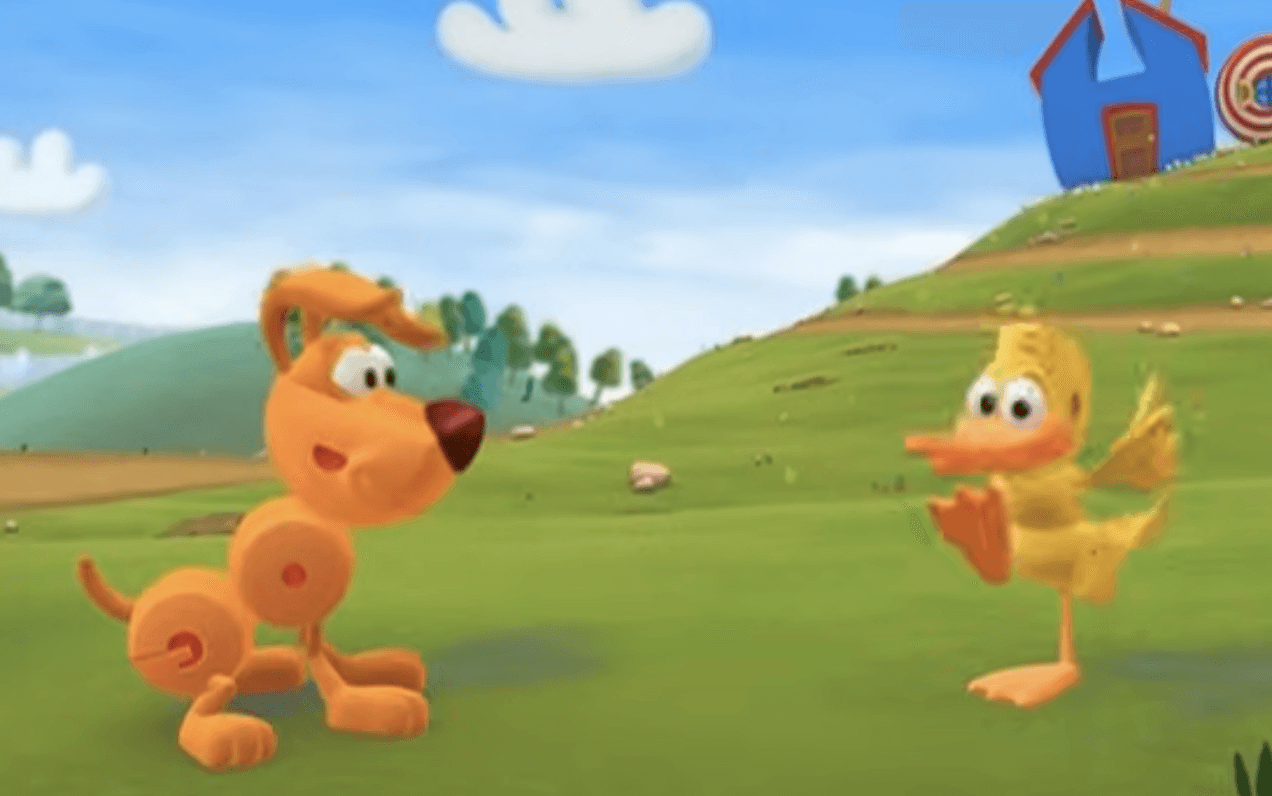
As you slide through take note of Duck's transformation. Anything looking squish squashy and particularly bouncy to you?
As you slide through take note of Duck's transformation. Anything looking squish squashy and particularly bouncy to you?
This informed a core design principle for Spark!: motion = emotion.
Bouncy, springy transitions signal delight and progress.
For wearables especially, where screen real estate is tiny, motion becomes the primary expressive layer.
A gentle pulse on the Apple Watch, a blooming flower animation on iOS. These micro-moments make the experience feel alive rather than clinical.
ii. Visual Design
Color Palette - Spark! Emotion Garden
Color Palette - Spark! Emotion Garden
Our visual direction was anchored in warmth, whimsy, and soft naturalism. We pulled references from children's media, indie game aesthetics, and garden/nature illustration styles — favoring rounded forms, saturated but muted palettes, and organic textures over sharp or sterile UI patterns.
Our visual direction was anchored in warmth, whimsy, and soft naturalism. We pulled references from children's media, indie game aesthetics, and garden/nature illustration styles — favoring rounded forms, saturated but muted palettes, and organic textures over sharp or sterile UI patterns.
Seed
#3A3A3A
Body text
Cloud
#F9F5F0
Background/
Base
Angry
#FF7F7F
Frustrated/
Mad
Worried
#C3B1E1
Anxious/
Scared
Sad
#A0C4FF
Upset/
Tired
Annoyed
#FF9EB5
Annoyed/
Irritated
Joy
#FFD670
Excited/
Proud
Calm
#A8E6CF
Relaxed/
Happy
why these colors?
Our emotion colors were grounded in feelings wheels, like Plutchik’s Wheel of Emotions and Willcox’s Feeling Wheel, which use color to help people identify, label, and regulate their emotions. Following Plutchik’s wheel, joy is yellow, anger is red, and sadness is blue, which builds on associations kids may already recognize.
For worried and calm, we chose lavender and soft green to keep the palette gentle and easy to tell apart from the stronger emotions.
Because pastels alone don’t have enough contrast, every emotion pairs its color with a face, so kids never have to rely on color alone to know what they’re picking.
Plutchik, R. (2001). The Nature of Emotions. American Scientist, 89(4), 344–350.
Willcox, G. (1982). The Feeling Wheel. Transactional Analysis Journal, 12(4), 274–276.
Typography - Spark! Emotion Garden
Aa
Aa
Typeface — Poppins
heading 1 , semibold
heading 2, medium
body, regular
Typeface — Poppins
heading 1 , semibold
heading 2, medium
body, regular
Poppins was chosen as our typeface for its friendly, geometric roundness — approachable without being babyish, which respected our users' sense of autonomy. UI inspiration leaned into cartoonish illustration, soft gradients, and living, responsive elements (plants that grow, petals that bloom) to make emotional tracking feel rewarding rather than clinical.
User flows & wireframes
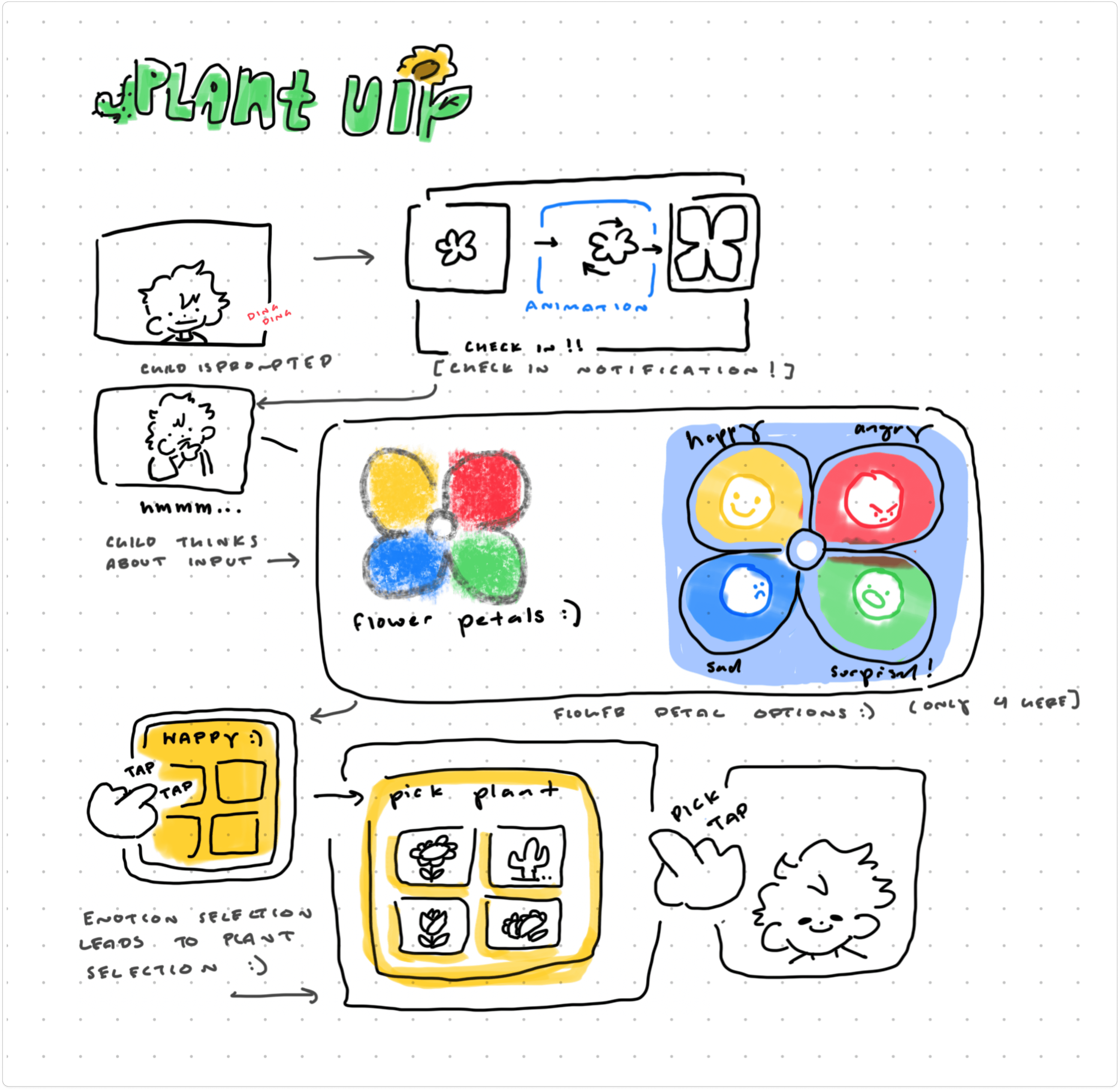
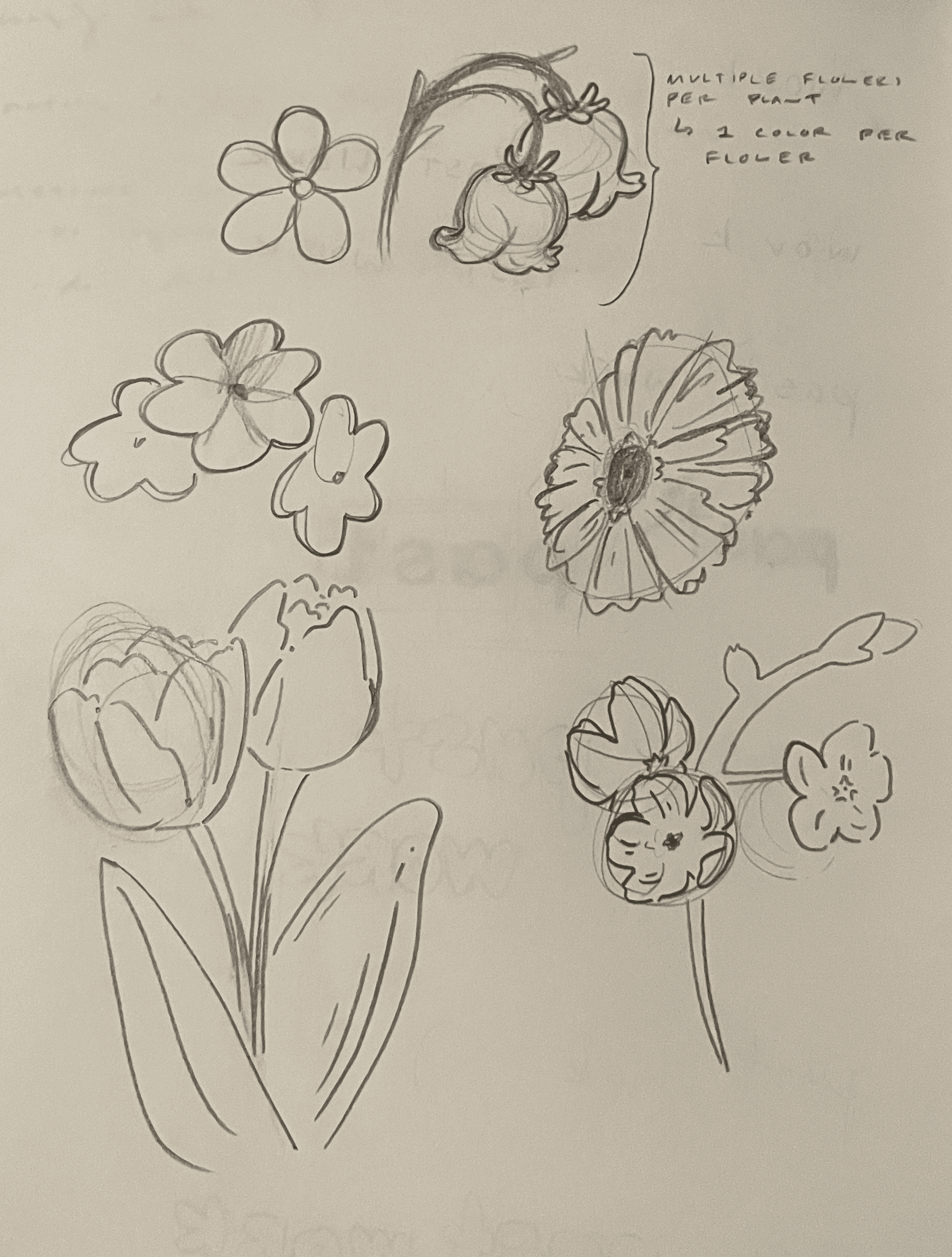
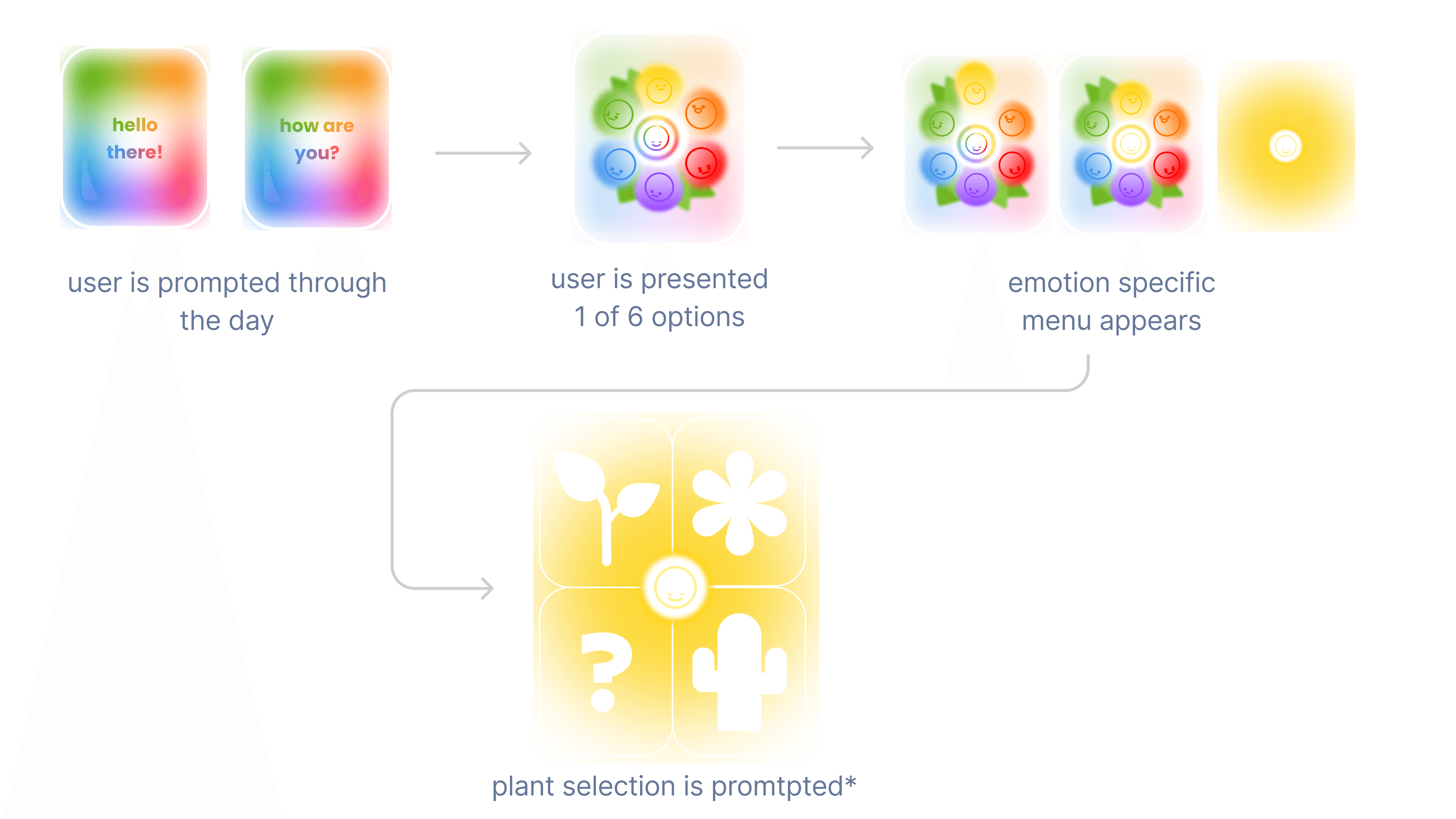
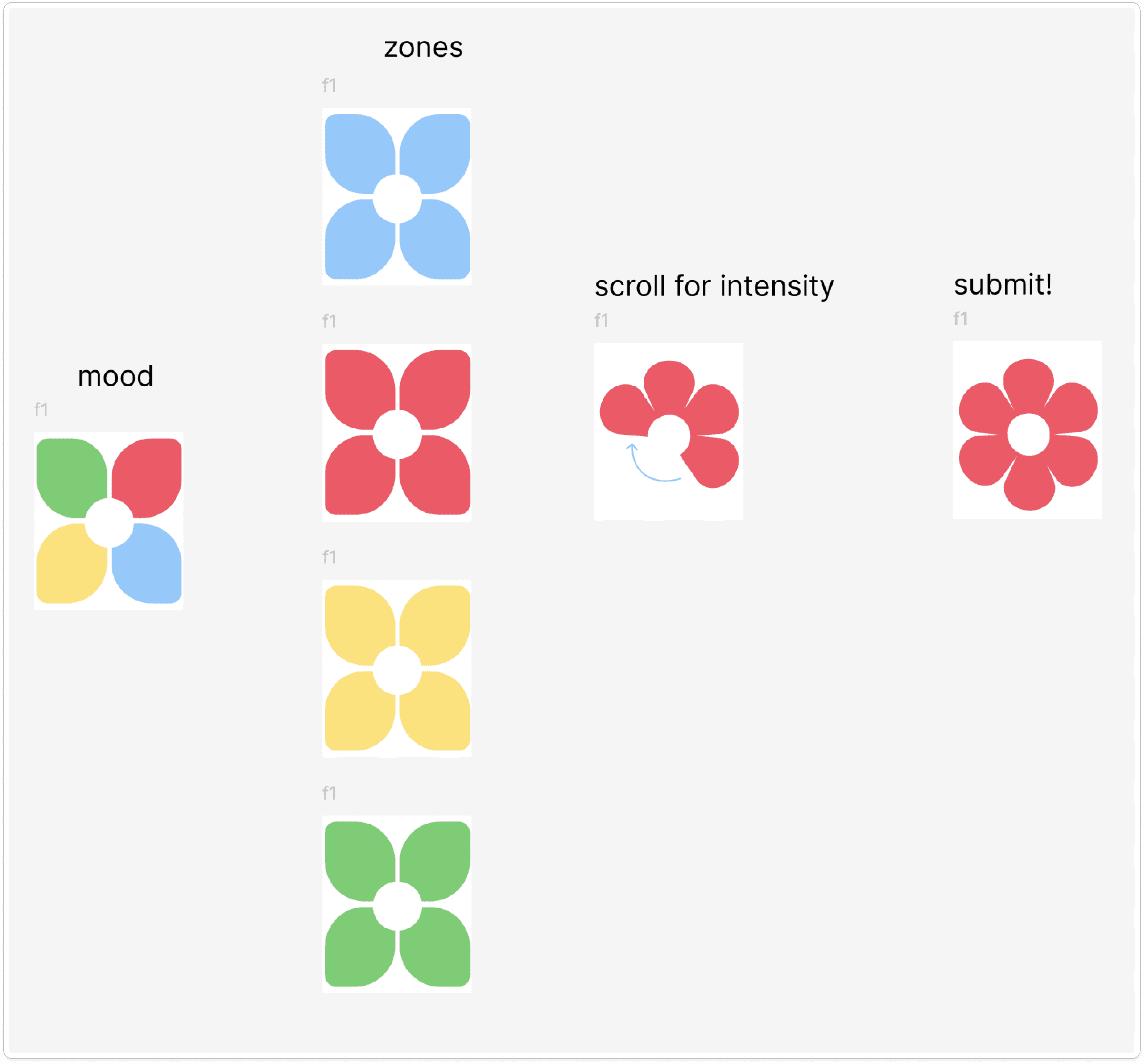
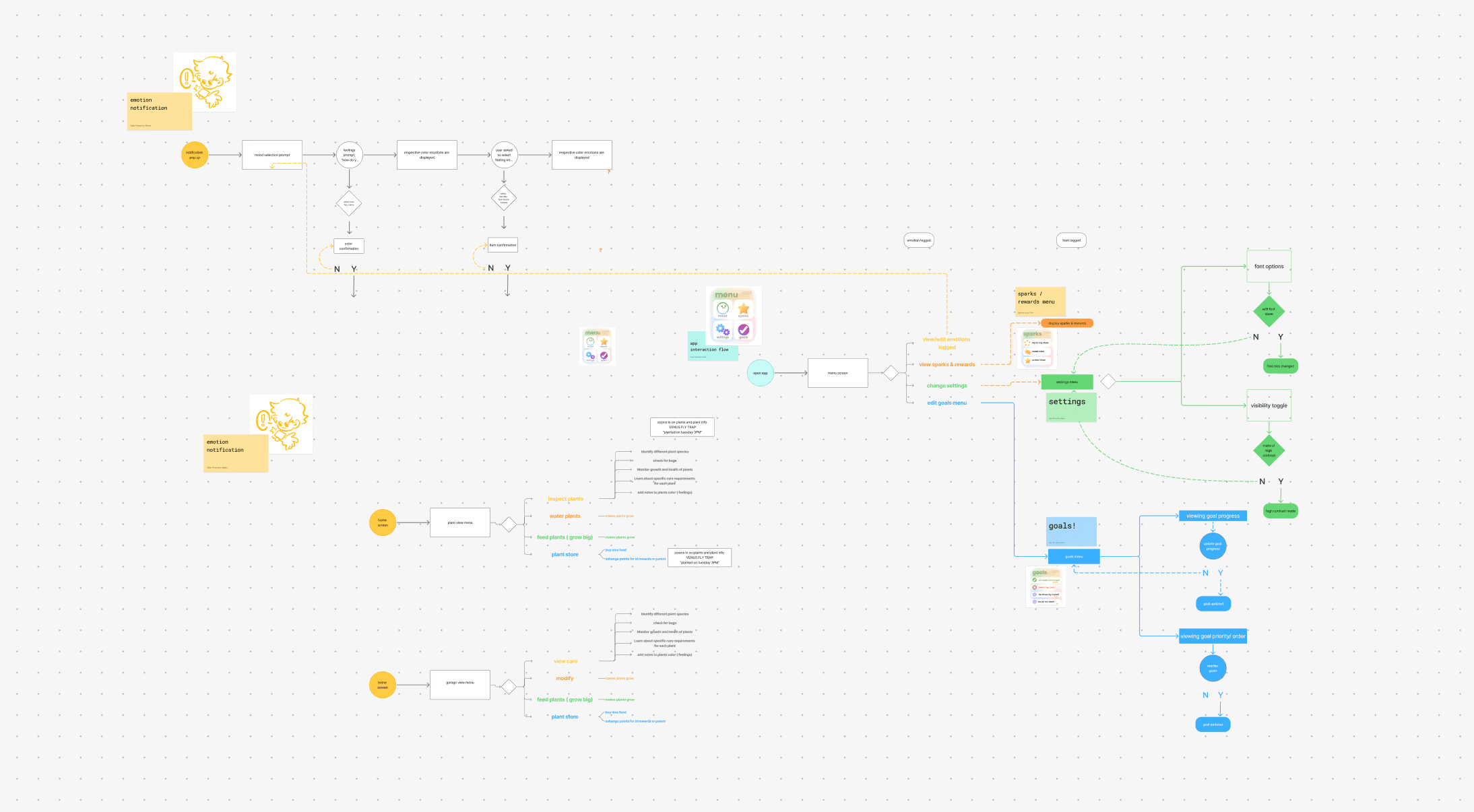
Early wireframes mapped the child's iOS + Apple Watch loop :
log emotion → complete task → earn garden reward
I focused on designing the child's journey — mapping the emotion check-in, garden growth screen, and the reward loop connecting them.
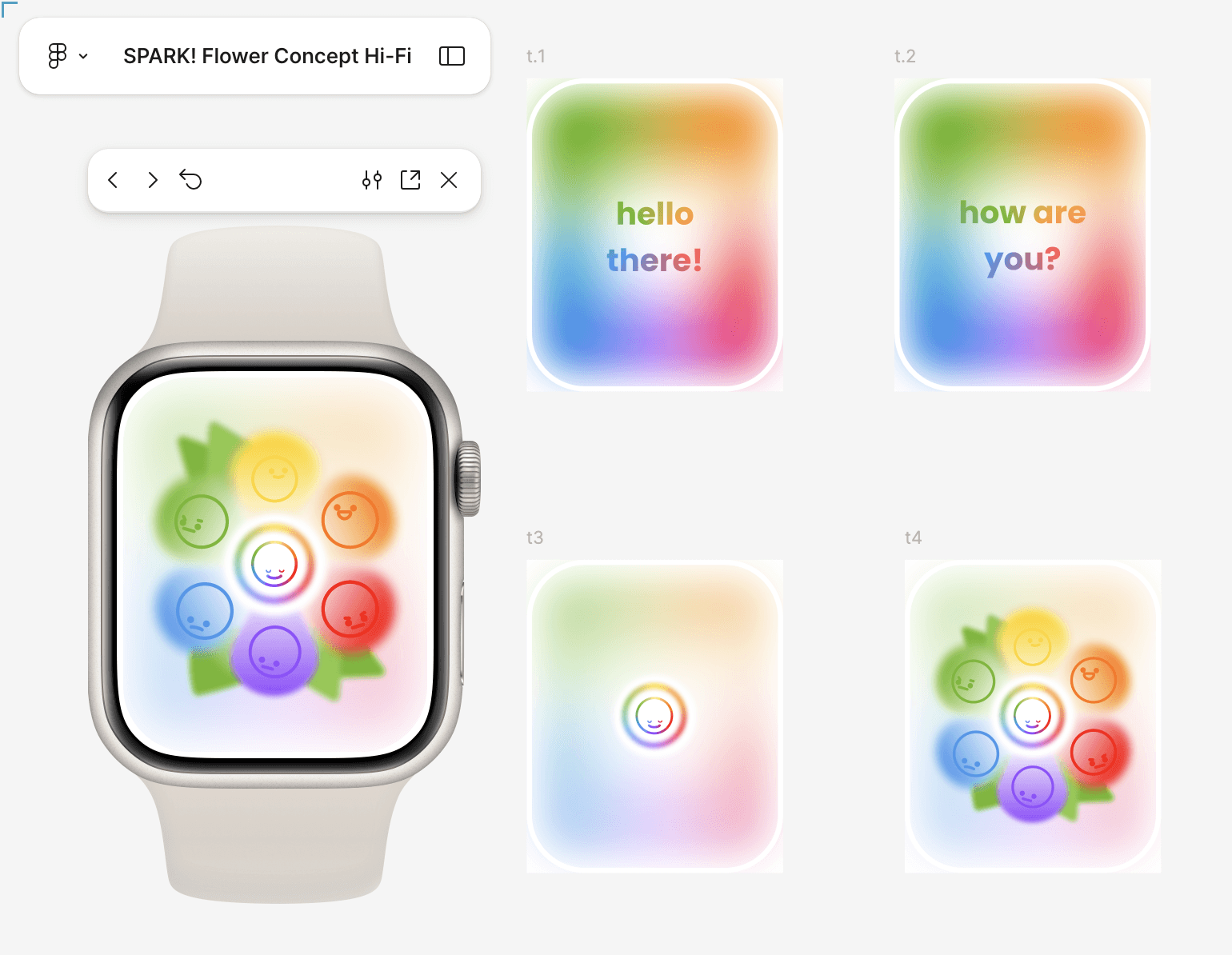
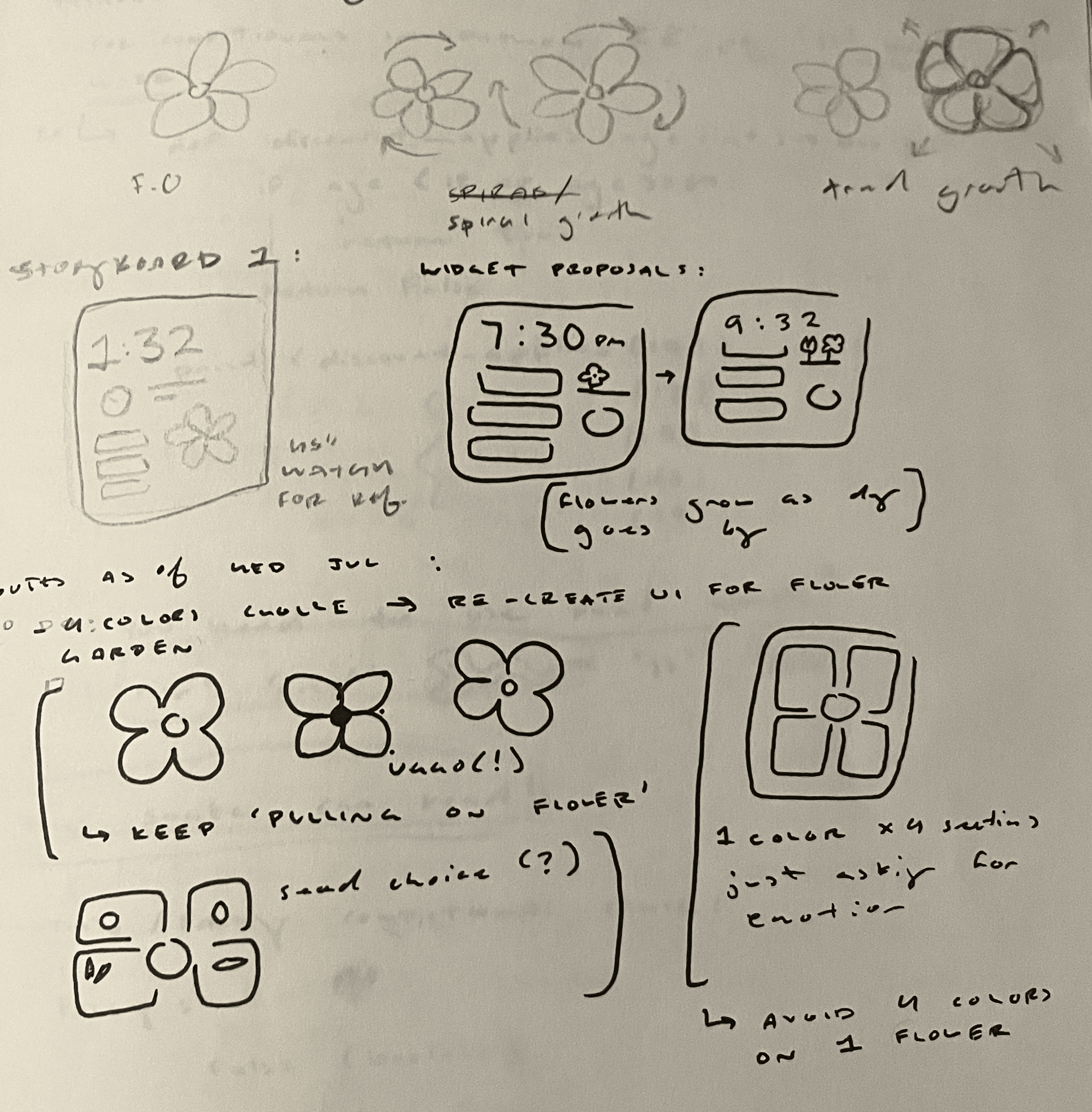
Early wireframes mapped the child's iOS + Apple Watch loop :
log emotion → complete task → earn garden reward
I focused on designing the child's journey — mapping the emotion check-in, garden growth screen, and the reward loop connecting them.
iteration
CoolCraig’s original screens worked, but they were pretty static. Checking in felt like filling out a form, and nothing about it made a kid want to come back. So I added micro-animations and interactions: bouncy taps, a blooming garden, and feedback on every check-in. That’s where “motion = emotion” came from.
CoolCraig’s original screens worked, but they were pretty static. Checking in felt like filling out a form, and nothing about it made a kid want to come back. So I added micro-animations and interactions: bouncy taps, a blooming garden, and feedback on every check-in. That’s where “motion = emotion” came from.

before: original CoolCraig Apple Watch screens (goals, rewards, mood tracking).
Image: Cibrian, F. L. (2024). Well-Being by Design Fellowship. Joan Ganz Cooney Center at Sesame Workshop.
before: original CoolCraig Apple Watch screens (goals, rewards, mood tracking).
Image: Cibrian, F. L. (2024). Well-Being by Design Fellowship. Joan Ganz Cooney Center at Sesame Workshop.
Goals
Goals
Rewards
Rewards
Mood Tracking
Mood Tracking
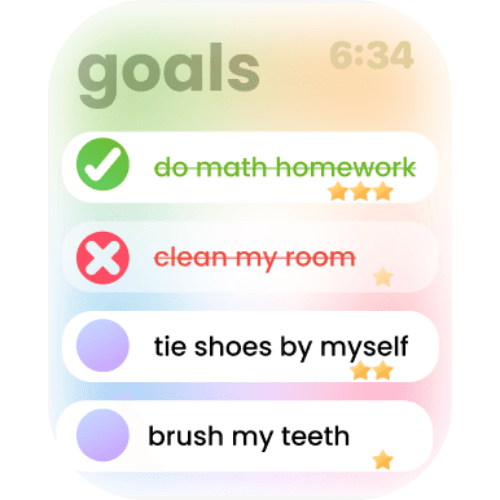
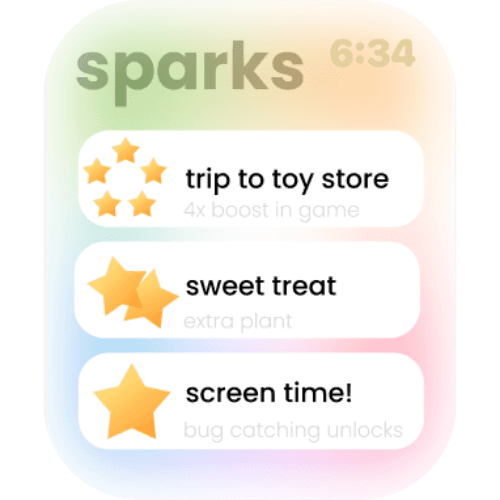
after: my redesign of the same three flows.
goals → tasks earn stars, with clear done/missed states
rewards → sparks: kid-friendly real-world rewards paired with in-game boosts (extra plants, unlocks)
mood tracking → 5 emotions with faces, with colors grounded in feelings wheels
after: my redesign of the same three flows.
goals → tasks earn stars, with clear done/missed states
rewards → sparks: kid-friendly real-world rewards paired with in-game boosts (extra plants, unlocks)
mood tracking → 5 emotions with faces, with colors grounded in feelings wheels
Deliverables
animated interactions
animated interactions
hover to preview animations!
animations designed with Jitter, prototype built in Framer
app menu prototype screens
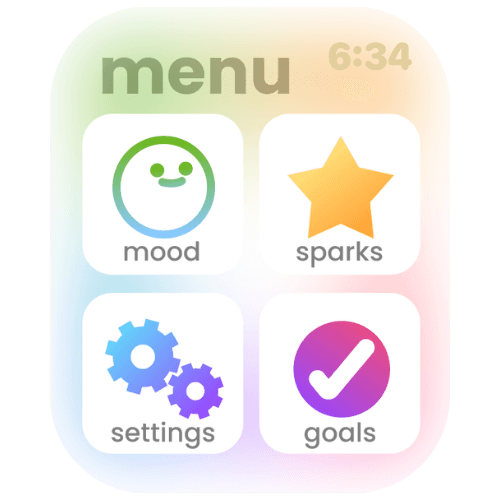
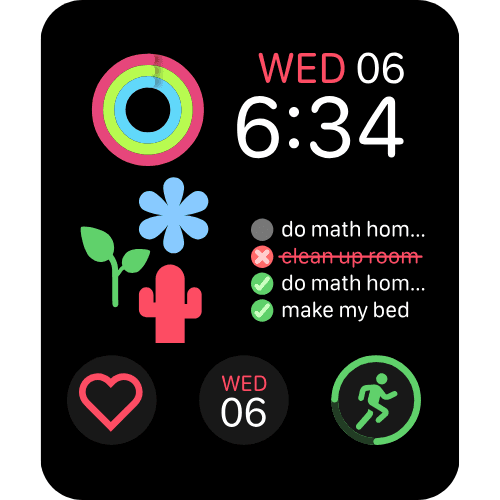
iOS prototype sneak peek
iOS prototype in XCode
retrospective & reflection
Spark! was a concept project built on real research — but the research itself points to exactly what's still missing.
Dr. Cibrian's own CoolCraig studies found that children engaged more with goal-setting features than with mood tracking. That finding quietly complicated our design: if kids are more motivated by goals than emotions, does an emotion-first check-in actually build self-awareness — or does the garden reward just train them to tap through the feeling to get to the prize?
The gamification we designed was intentional, but in hindsight it needed more nuance. Maybe rewards should fade as the habit forms, gradually shifting the focus from earning to genuinely reflecting.
The research team also noted that the Emotional Garden concept still needed co-design sessions with kids, caregivers, and clinicians before being tested with real families.
We built our design exploration on top of that open question — which means our work was always a proposal, not a solution.
There's a meaningful difference between designing *for* neurodivergent children and designing *with* them, and the research is clear: young people know best.
The thing I most want to iterate on is the Apple Watch interactions. The wearable carries a lot of weight in this ecosystem — it's the child's primary check-in point — but 4 weeks wasn't enough time to stress-test what those micro-interactions actually feel like in practice.
Tap feedback, notification timing, emotion target size on a tiny screen: all of that needs real iteration with real wrists, and ideally real kids. If I were to continue this project, I'd want to start there — co-designing with the kids themselves, messy prototypes and all.